
Stable defect
A soft, reducible bulge with predictable symptoms can usually be assessed during a planned consultation.
Ventral hernia care in Austin & Central Texas
A ventral hernia can range from a small midline bulge to a broad, complex abdominal-wall defect. A useful plan maps the entire wall, identifies what is causing symptoms, and matches reconstruction to your health and goals.
What is this?
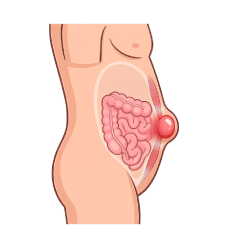
A ventral hernia is an opening through the muscles and supporting tissue at the front of the abdomen. It may occur naturally along the midline or overlap with a prior incision. Fat or bowel can move through the opening and create a bulge that is more visible when standing, coughing, or straining.
The visible bulge does not always show the full size of the defect. Examination assesses the location, tenderness, reducibility, muscle separation, and skin. CT imaging can help map multiple openings, recurrent hernias, or larger defects and show the relationship to previous mesh or abdominal organs.
Treatment planning considers the whole abdominal wall, not just the most visible point.
Should I be concerned?
Many ventral hernias can be evaluated electively, but a progressively painful, harder-to-reduce, or obstructing hernia deserves faster attention.
A soft, reducible bulge with predictable symptoms can usually be assessed during a planned consultation.
Increasing size, discomfort, skin irritation, core weakness, or limits on work and exercise support timely review.
Severe pain, vomiting, abdominal swelling, fever, or a firm discolored bulge requires immediate care.
Do I need surgery?
Symptomatic, enlarging, recurrent, or function-limiting ventral hernias commonly lead to repair. Very small stable defects may allow individualized planning when symptoms and immediate risk are low. A complex repair may benefit from preparation before surgery.
Nicotine cessation, diabetes control, nutrition, weight management, skin health, and treatment of infection can reduce avoidable wound and recurrence problems. Larger defects may require reconstruction of muscle layers, removal or revision of old mesh, and a hospital stay.
A direct incision allows the surgeon to release the hernia, close the defect, and place reinforcement where planned.
Small primary defects or complex reconstructions that require broad direct access.
A camera and long instruments allow repair from inside the abdomen with mesh reinforcement.
Selected defects where internal access offers a sound repair strategy.
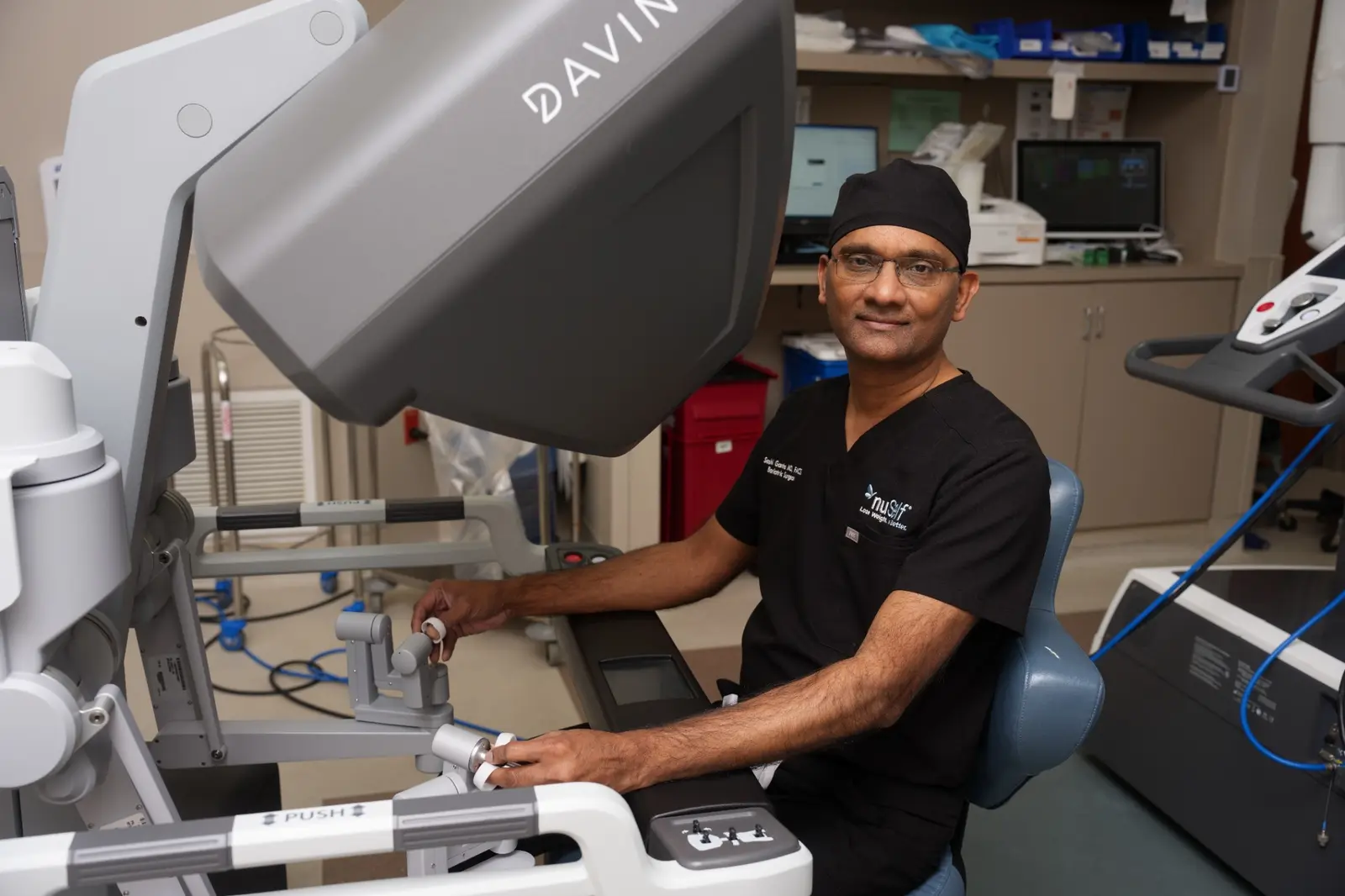
The surgeon controls articulated instruments to close and reinforce selected defects through small incisions.
Anatomy suited to minimally invasive suturing and abdominal-wall reconstruction.
Complexity made understandable
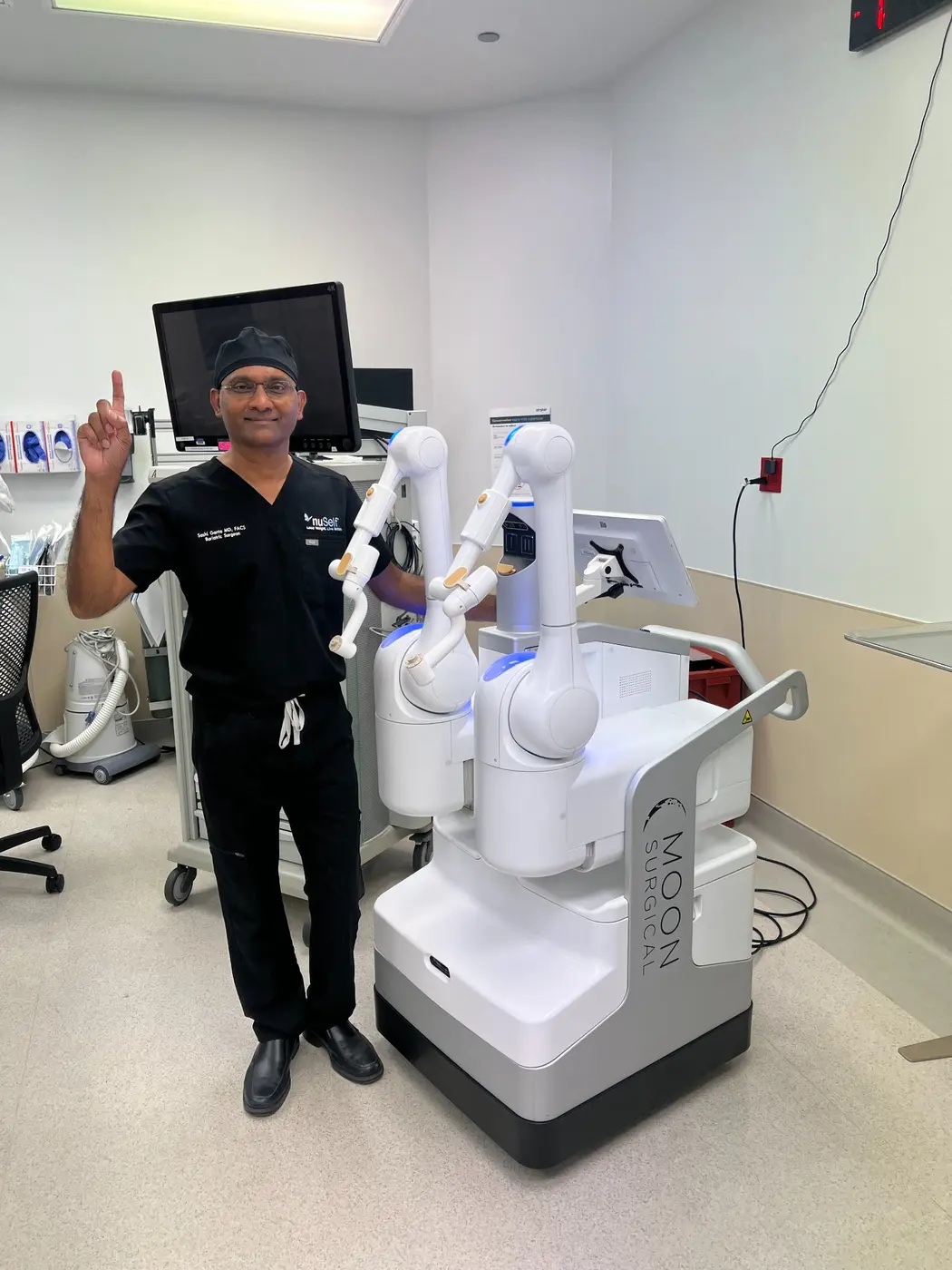
NuSelf explains the planned tissue layers, whether mesh is recommended, the expected facility and hospital course, and how the abdominal wall will be protected during healing. Technology supports the plan when appropriate; it does not replace surgical judgment.
Explore robotic surgery at NuSelfHow quickly?
Elective preparation can make a meaningful difference in larger abdominal-wall repairs. Rapid changes or intestinal symptoms bypass routine scheduling.
Stable reducible hernia with manageable symptoms and time to optimize health.
Schedule evaluation, imaging if needed, and preparation.Increasing size or pain, new skin change, reduced activity, or more difficulty reducing the hernia.
Contact NuSelf for timely evaluation.Severe pain, vomiting, distention, fever, bowel-function change, or a trapped bulge.
Call 911 or go to the nearest emergency department.Who will perform my repair?
Your surgeon reviews the entire repair problem, explains open and minimally invasive choices, and coordinates optimization when a more extensive reconstruction is appropriate.

Founder & Board-Certified Surgeon
Yale fellowship-trained surgeon with experience in advanced minimally invasive, robotic, complex general, bariatric, revisional, and second-opinion care.
View physician profile
Board-Certified, Fellowship-Trained Surgeon
Yale-affiliated chief residency and advanced fellowship training in minimally invasive, bariatric, robotic, and general surgery.
View physician profileWill it be painful?
A small repair may produce localized soreness; a larger reconstruction can create broader abdominal tightness and require more recovery support. Anesthesia, multimodal medications, early movement, and procedure-specific strategies are planned before surgery.
How long until I feel like myself?
Defect size, reconstruction, previous surgery, hospital course, and physical work demands all matter. The sequence is consistent even when the dates differ.
Complex reconstruction takes longer. Your written instructions will specify work, driving, lifting, exercise, binder or drain care, and the symptoms that should prompt a call.
Frequently asked questions
Short answers to the questions that often come next. Your examination, testing, and medical history determine what applies to you.
Explore patient resourcesVentral describes a defect through the front abdominal wall. An incisional hernia is a ventral hernia that occurs at a previous surgical incision. The operative history often makes incisional planning more complex.
Not everyone does. CT imaging is especially useful for larger, recurrent, multiple, or less obvious defects and when previous mesh or complex anatomy must be mapped.
It is a broader repair that restores muscle layers and reinforces a large or complex defect. The exact technique depends on anatomy, prior operations, contamination, and tissue quality.
Elective repair may be delayed briefly to improve nicotine exposure, diabetes control, nutrition, weight, or another condition when doing so can make healing safer and more durable.
Mesh is commonly considered for ventral hernias because it reinforces the repair and reduces tension. Your surgeon will explain the material, position, benefits, and condition-specific concerns.
Some selected repairs are outpatient. Larger or more complex reconstructions may require an inpatient stay. The proposed operation and your health determine the expected setting.
Your next step
Share where the abdominal-wall change occurs, how it affects function, and whether prior repairs are involved. Explore care options or schedule a ventral hernia consultation.
This page provides general education and does not replace an examination, diagnosis, or individualized medical advice.