
Typical controlled reflux
Intermittent heartburn that responds to treatment can usually be evaluated through a scheduled digestive or surgical visit.
Foregut and reflux care in Austin & Central Texas
Persistent heartburn, regurgitation, chest pressure, or swallowing difficulty can affect eating and sleep. A clear plan separates the symptom from the cause, confirms whether reflux or a hiatal hernia is responsible, and treats the right mechanism.
What is this?
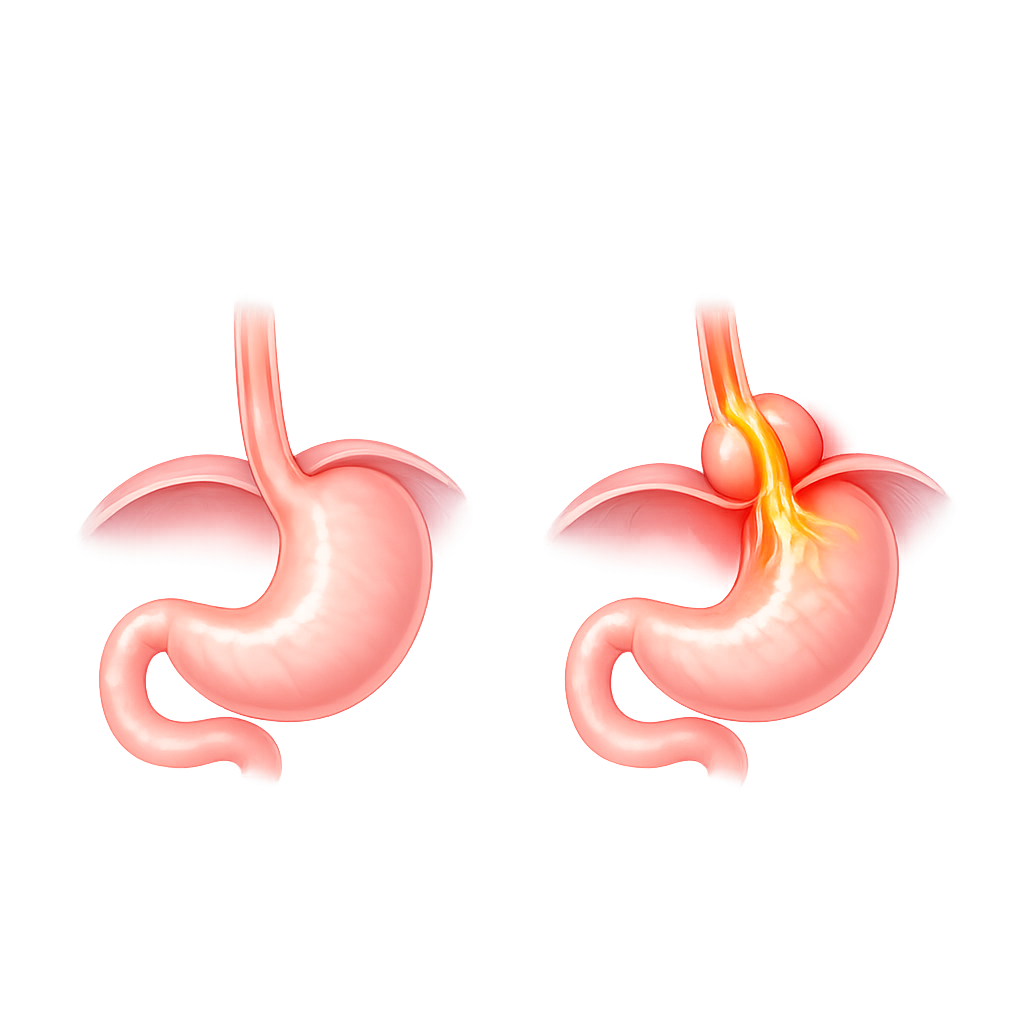
Gastroesophageal reflux occurs when stomach contents move into the esophagus and cause troublesome symptoms or injury. A hiatal hernia occurs when part of the stomach moves through the diaphragm into the chest. The two often occur together, but a hiatal hernia can be present without severe reflux and reflux can occur without a large hernia.
Heartburn and regurgitation are common. Some patients notice chest pressure, cough, hoarseness, nighttime symptoms, early fullness, or swallowing difficulty. Because heart, lung, motility, ulcer, and other disorders can overlap, treatment begins by confirming the cause.
The size of a hiatal hernia alone does not determine treatment. Symptoms, esophageal health, swallowing function, and objective test results matter together.
Should I be concerned?
Many reflux symptoms begin with medical treatment. Difficulty swallowing, bleeding, anemia, weight loss, or severe pain requires prompt evaluation and sometimes urgent care.
Intermittent heartburn that responds to treatment can usually be evaluated through a scheduled digestive or surgical visit.
Breakthrough symptoms, regurgitation, swallowing difficulty, anemia, cough, or a known larger hernia support focused testing.
Chest pain, breathing difficulty, bleeding, inability to swallow liquids, persistent vomiting, fainting, or sudden severe pain requires urgent care.
Do I need surgery?
Lifestyle measures and acid-suppressing medication can control many cases. Surgery may be considered when objective reflux persists despite appropriate treatment, medication is not tolerated or desired after informed discussion, a significant hiatal hernia is causing symptoms, or anatomy requires repair.
Testing may include upper endoscopy, contrast imaging, reflux monitoring, and esophageal manometry. These studies help confirm reflux, define the hernia, assess swallowing, and choose a reconstruction that fits. Prior bariatric or foregut surgery makes records and individualized planning especially important.
Meal timing, selected lifestyle changes, and medication reduce reflux exposure and irritation.
Symptoms are typical, complications are absent, and treatment controls the condition.
The stomach is returned below the diaphragm and the opening is repaired.
A symptomatic hernia is confirmed and anatomy supports operative treatment.
A fundoplication or another selected reconstruction strengthens the reflux barrier.
Objective testing confirms reflux and swallowing function guides procedure choice.
Testing before treatment
Endoscopy can show inflammation and anatomy; reflux monitoring measures acid exposure; manometry evaluates esophageal movement. Together, these results help predict which intervention is reasonable and protect swallowing.
Explore GI endoscopyHow quickly?
Stable chronic symptoms permit structured testing. New swallowing problems, bleeding, weight loss, or severe symptoms move the evaluation forward.
Persistent heartburn or regurgitation without alarm symptoms and with stable food intake.
Schedule a review of treatment history and previous testing.Progressive swallowing difficulty, anemia, unexplained weight loss, recurrent vomiting, or worsening chest and upper-abdominal symptoms.
Contact a clinician promptly for directed testing.Severe chest pain, breathing difficulty, bleeding, inability to swallow liquids, fainting, or sudden severe pain.
Call 911 or go to the nearest emergency department.Who will evaluate me?
Your surgeon reviews the symptom pattern and objective tests, explains medical and procedural choices, and recommends an operation only when the findings support it.

Founder & Board-Certified Surgeon
Yale fellowship-trained surgeon with experience in advanced minimally invasive, robotic, complex general, bariatric, revisional, and second-opinion care.
View physician profile
Board-Certified, Fellowship-Trained Surgeon
Yale-affiliated chief residency and advanced fellowship training in minimally invasive, bariatric, robotic, and general surgery.
View physician profileWill testing or surgery be painful?
Upper endoscopy is typically performed with sedation. Reflux monitoring and manometry use small temporary catheters or devices and can be uncomfortable but provide important information. After surgical repair, upper-abdominal soreness, fatigue, and swallowing adjustment are expected.
How long until I feel like myself?
The operation performed, hernia size, previous surgery, and swallowing response determine pace. Diet progression is as important as activity progression.
Diet instructions protect the repair. Eating too quickly or advancing texture too soon can worsen discomfort. Your written plan will specify food progression, medication, work, driving, lifting, and reasons to call.
Frequently asked questions
Short answers to the questions that often come next. Your examination, testing, and medical history determine what applies to you.
Explore patient resourcesNo. Treatment depends on symptoms, hernia anatomy, reflux testing, swallowing function, complications, health, and response to medical care.
Common tests include upper endoscopy, contrast imaging, reflux monitoring, and esophageal manometry. Not every patient needs every test.
Some patients discontinue or reduce medication, while others continue it for persistent symptoms or another reason. Surgery does not guarantee that every symptom or medication need disappears.
Temporary swallowing difficulty is common during early swelling. Persistent dysphagia is less common and is one reason procedure selection, technique, and preoperative motility testing matter.
Fundoplication uses the upper stomach to reinforce the lower esophageal reflux barrier. The type and extent are selected from anatomy and swallowing function.
Yes. Sleeve, bypass, band, and revision anatomy can change testing and treatment. Bring original operation reports and recent imaging or endoscopy.
Your next step
Share the symptoms, medication response, and any endoscopy or reflux testing. Explore organized care options or schedule a focused reflux and hiatal hernia consultation.
This page provides general education and does not replace an examination, diagnosis, or individualized medical advice.