
Soft and reducible
The bulge becomes smaller when you rest or can be gently reduced, without severe or rapidly changing symptoms.
Inguinal hernia care in Austin & Central Texas
A groin bulge or discomfort usually brings the same questions: What is it? How serious is it? Do I need surgery, and how long until I feel like myself again? Start with clear answers and an experienced surgical evaluation.

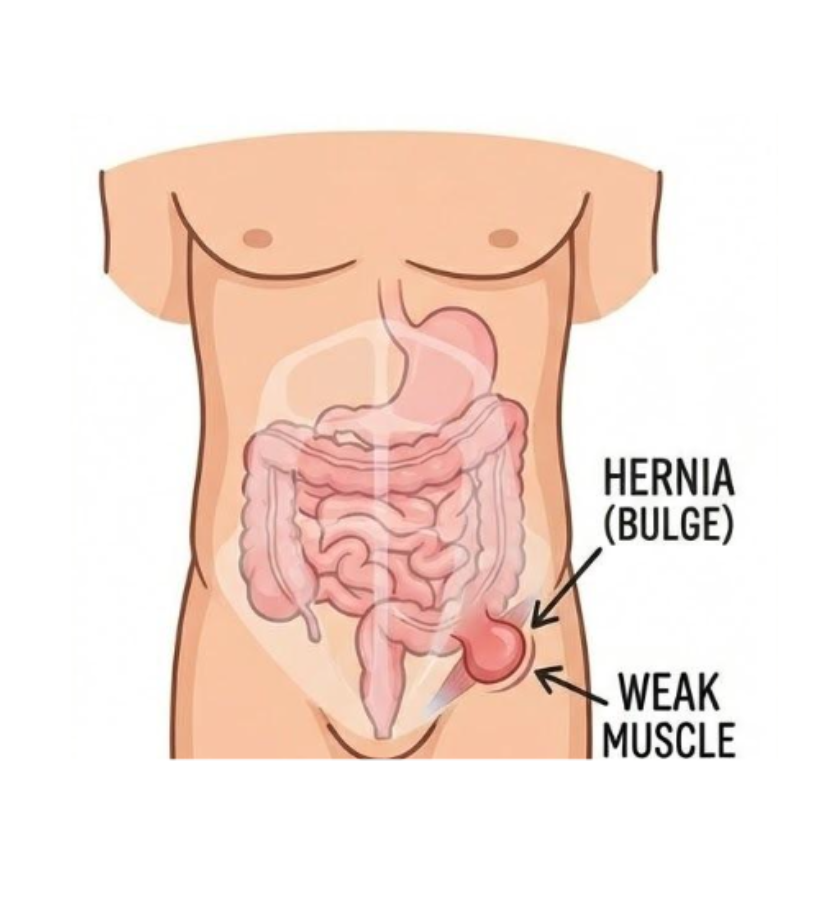
What is this?
An inguinal hernia forms when fat, intestine, or another structure pushes through a weak area and enters the groin. The bulge may appear only when you stand, cough, strain, or lift, then become smaller when you lie down.
Pain without a visible bulge still deserves an examination. Muscle, hip, nerve, urinary, and testicular concerns can feel similar, and imaging is sometimes useful when the diagnosis is not obvious.
Should I be concerned?
It may remain manageable for a time, but it can enlarge, become more uncomfortable, or interfere with work and exercise. The immediate concern is whether tissue has become trapped and lost its normal blood supply.
The bulge becomes smaller when you rest or can be gently reduced, without severe or rapidly changing symptoms.
Increasing size, aching, pressure, difficulty reducing the bulge, or limits on movement are reasons to schedule promptly.
Severe pain, a firm or discolored bulge, vomiting, fever, or abdominal swelling requires immediate medical attention.
Do I need surgery?
NuSelf generally recommends elective repair when the diagnosis is confirmed and the patient is medically fit for surgery. A hernia does not heal by itself and may become larger or more symptomatic. Timing and approach are personalized to the hernia, your health, previous operations, and daily demands. Repair may be deferred when operative risk outweighs benefit or health needs should be optimized first.
A groin incision provides direct access to return the tissue and reinforce the weak area.
A direct approach or a particular anesthesia plan is preferred.
Small abdominal incisions allow repair from behind the abdominal wall using a camera and long instruments.
Both sides are involved or a selected hernia has returned after open repair.
The surgeon uses articulated instruments and three-dimensional visualization through small incisions.
A minimally invasive approach fits the anatomy and operative plan.
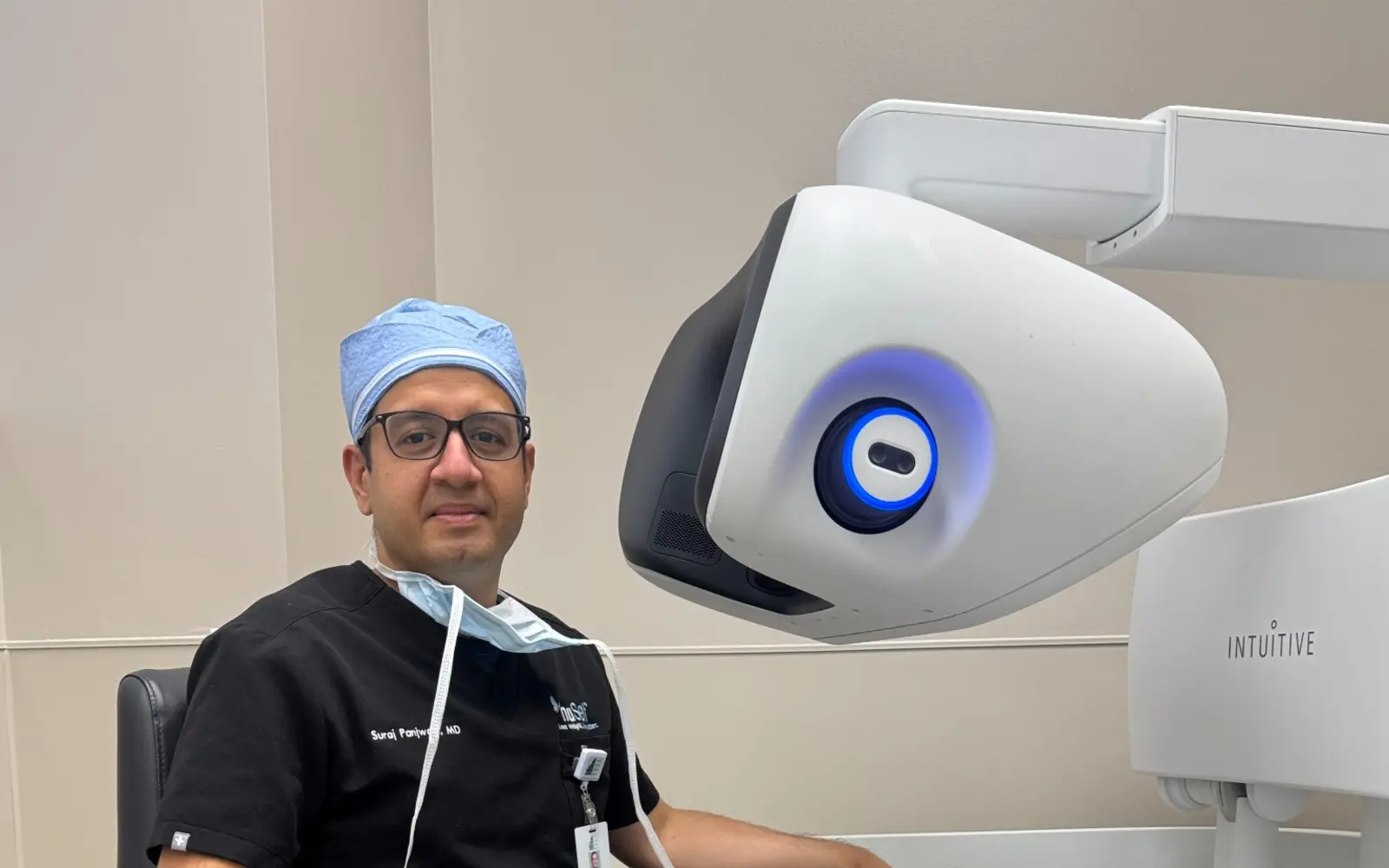
Technology with purpose
NuSelf surgeons use open, laparoscopic, and robotic techniques. When robotic assistance is appropriate, the da Vinci 5® system can support enhanced visualization, precise instrument movement, and minimally invasive access. Your surgeon remains in control throughout the operation.
Explore robotic surgery at NuSelfHow quickly?
Most inguinal hernias can be evaluated and repaired on a planned schedule. A changing or trapped hernia moves the timeline forward.
Stable bulge, manageable discomfort, and no emergency signs.
Schedule an evaluation and choose the right repair window.Increasing pain or size, new activity limits, or a bulge that is harder to reduce.
Contact the office for timely guidance.Sudden severe pain, firm or discolored bulge, vomiting, fever, or abdominal swelling.
Call 911 or go to the nearest emergency department.Who will perform my repair?
Your consultation is with a surgeon who can evaluate the diagnosis, compare open and minimally invasive approaches, and explain why a specific plan fits you.

Founder & Board-Certified Surgeon
Yale fellowship-trained surgeon with experience in advanced minimally invasive, robotic, complex general, bariatric, and revisional surgery.
View physician profile
Board-Certified, Fellowship-Trained Surgeon
Yale-affiliated chief residency and advanced fellowship training in minimally invasive, bariatric, robotic, and general surgery.
View physician profileWill it be painful?
Pain is controlled with anesthesia during the operation. After repair, soreness, tightness, swelling, or a pulling sensation is common, especially when standing, coughing, or changing position.
Many patients use prescription pain medication, when needed, for about the first two days. Milder discomfort can continue as the tissues heal.
How long until I feel like myself?
This is a general guide for an uncomplicated repair. Your operative approach, health, work demands, and surgeon’s instructions may change the pace.
Your instructions take priority. We will give you a personalized plan for driving, work, lifting, exercise, follow-up, and reasons to call.
Frequently asked questions
Short answers to the questions that often come next. Your examination and medical history determine what applies to you.
Explore patient resourcesMany inguinal hernias can be diagnosed from your symptoms and a focused physical examination. Ultrasound, CT, or MRI may help when the bulge is not obvious, another cause of pain is possible, or a recurrent or complex hernia needs more definition.
Mesh is commonly used to reinforce the weakened area and reduce tension on the repair. A tissue repair may be considered in selected situations. Your surgeon will explain the recommended material, placement, and alternatives for your anatomy and history.
Open repair reaches the hernia through a groin incision. Laparoscopic and robotic-assisted repairs use small abdominal incisions and approach the groin from behind the abdominal wall. The right approach depends on the hernia, previous operations, health considerations, and surgeon experience.
Often, yes. A minimally invasive approach can allow the surgeon to evaluate both groins and repair confirmed hernias during one operation when that is appropriate. Your examination, symptoms, and operative plan determine whether a bilateral repair makes sense.
Recurrence is possible after any hernia repair, although modern techniques are designed to reduce that likelihood. Hernia anatomy, previous repairs, tissue quality, smoking, healing, and the chosen technique can all affect risk.
Your surgeon will review the bulge or discomfort, when it appears, previous abdominal operations, medications, health conditions, work, and activity goals. A focused examination usually confirms the diagnosis. You will leave with a clearer understanding of timing, repair options, and the next step.
Your next step
Share what you are experiencing and what you hope to resolve. Explore organized care options or schedule a focused inguinal hernia consultation.
This page provides general education and does not replace an examination, diagnosis, or individualized medical advice.