
Selected minimally invasive case
The diagnosis, anatomy, prior operations, health, and facility support a small-incision robotic plan.
Advanced surgeon-controlled technology in Central Texas
Robotic surgery is not an operation and the robot does not operate independently. It is a surgeon-controlled way to perform selected procedures through small incisions with magnified visualization and articulated instruments.
How does it work?
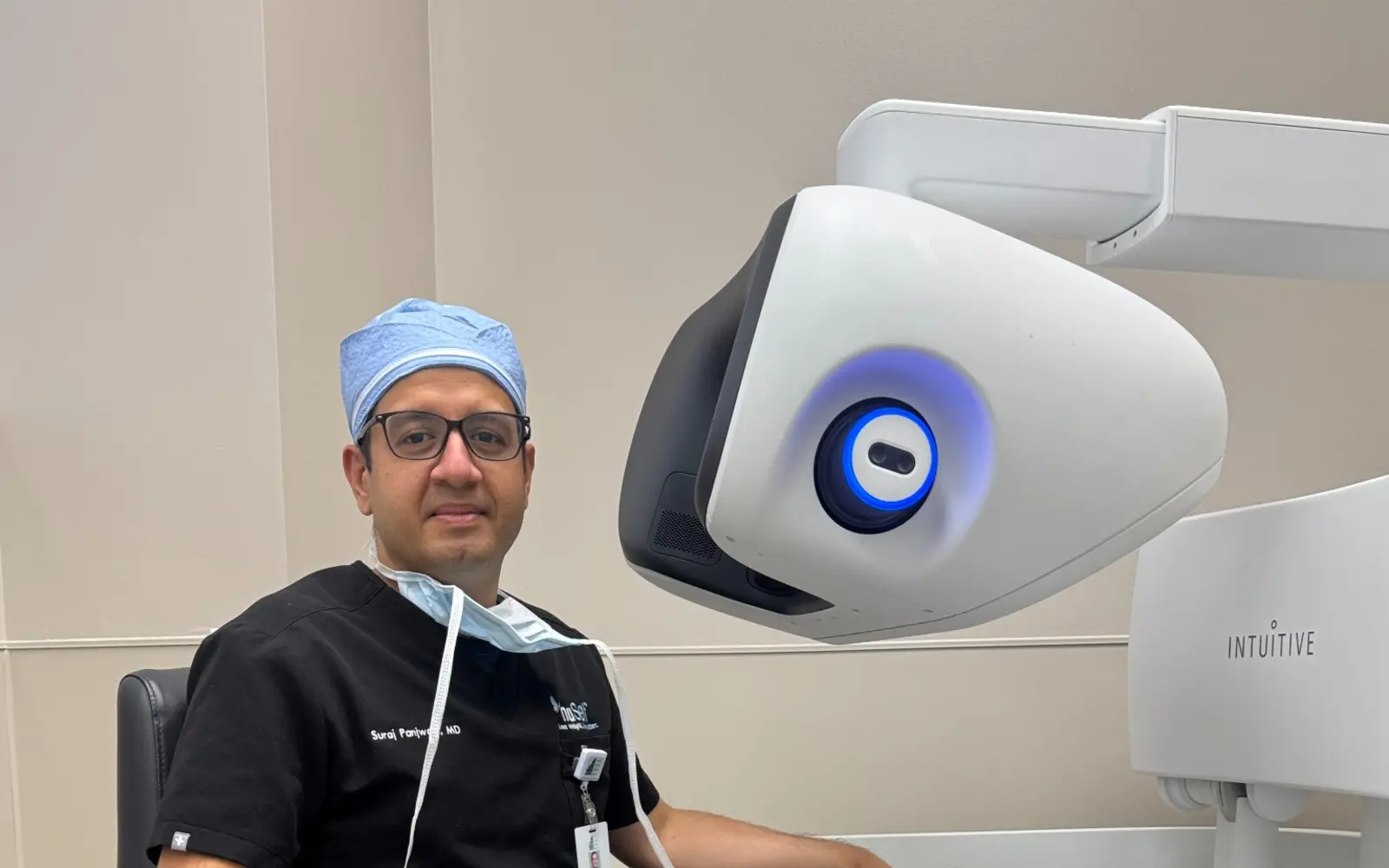
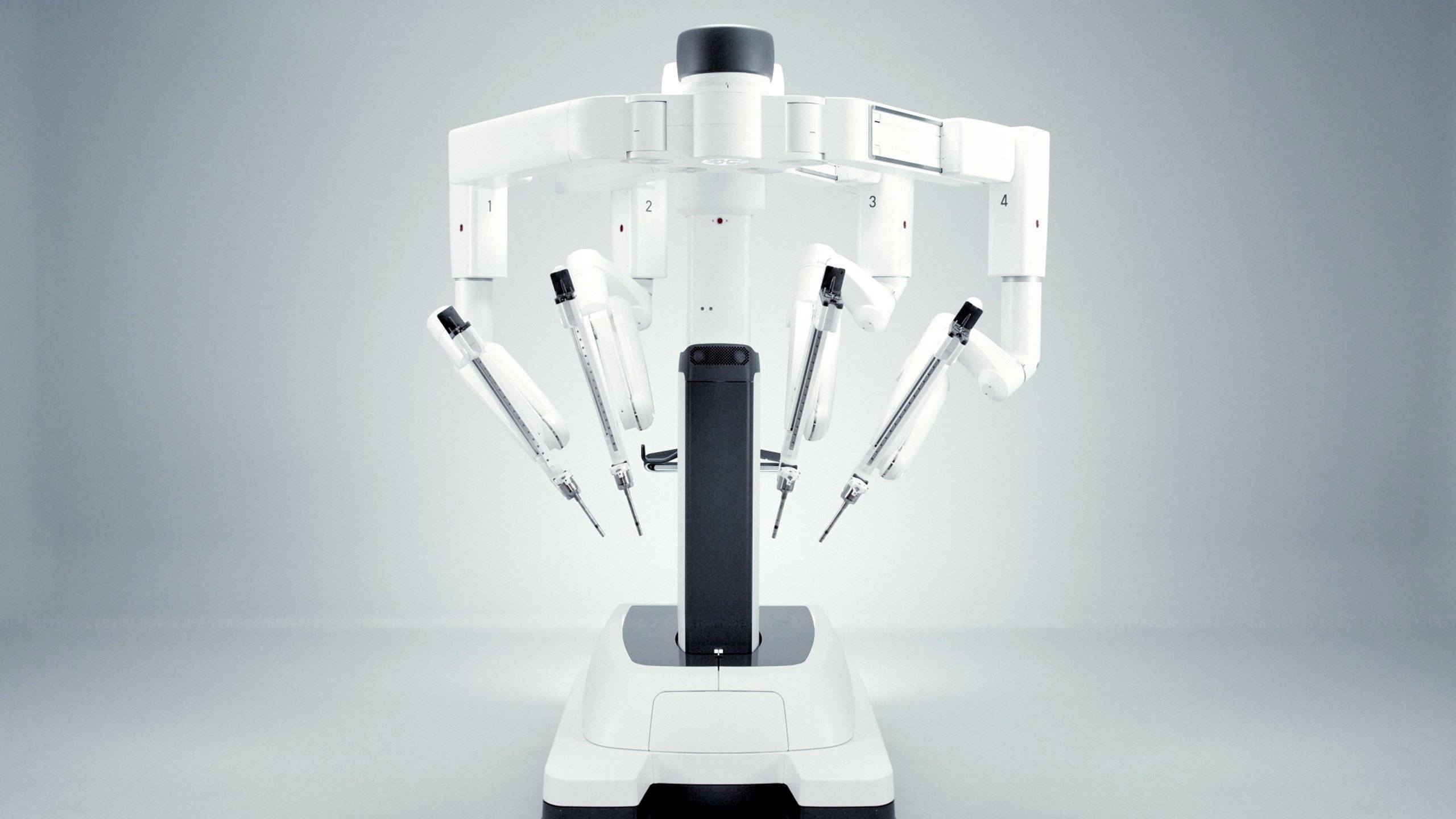
During robotic-assisted surgery, the physician sits at a console and views a magnified three-dimensional image of the operative field. Hand controls direct instruments positioned at the patient through small incisions. The instruments can bend and rotate in ways that support precise dissection and suturing.
A trained team remains at the bedside, manages instruments, anesthesia, and patient safety, and can change the operative approach when needed. The robotic system is a computer-assisted surgical tool, not an autonomous surgeon and not a substitute for clinical judgment.
The meaningful question is not whether a robot is available. It is whether robotic access supports the safest, most effective plan for the specific operation.
Is it right for me?
A robotic approach can be valuable when the anatomy and required surgical work benefit from its visualization and instrument movement. It is not automatically better for every patient or operation.
The diagnosis, anatomy, prior operations, health, and facility support a small-incision robotic plan.
Robotic, laparoscopic, and open techniques may all be reasonable; the surgeon should explain the tradeoffs.
Severe inflammation, scar tissue, bleeding, anatomy, or another finding may make open access or conversion safer.
How does it compare?
Robotic and laparoscopic surgery both use small incisions and a camera. Laparoscopy uses long rigid instruments held at the operating table; robotic assistance provides articulated instruments controlled from a console. Open surgery uses a larger direct incision and remains the right choice for many situations.
Potential benefits and limitations must be discussed for the actual procedure. Incision size alone does not determine internal healing, pain, complication risk, hospital stay, or long-term outcome. Surgeon experience, sound patient selection, and a safe backup plan remain central.
Three-dimensional visualization and wristed instruments support selected dissection, suturing, and reconstruction.
What part of my operation benefits from this platform?
A camera and long instruments allow many abdominal operations through small incisions.
How does laparoscopy compare for my anatomy and surgeon’s experience?
A larger incision provides direct exposure and can be the safest or most effective approach.
What finding could make open access preferable or necessary?
A team, not a machine
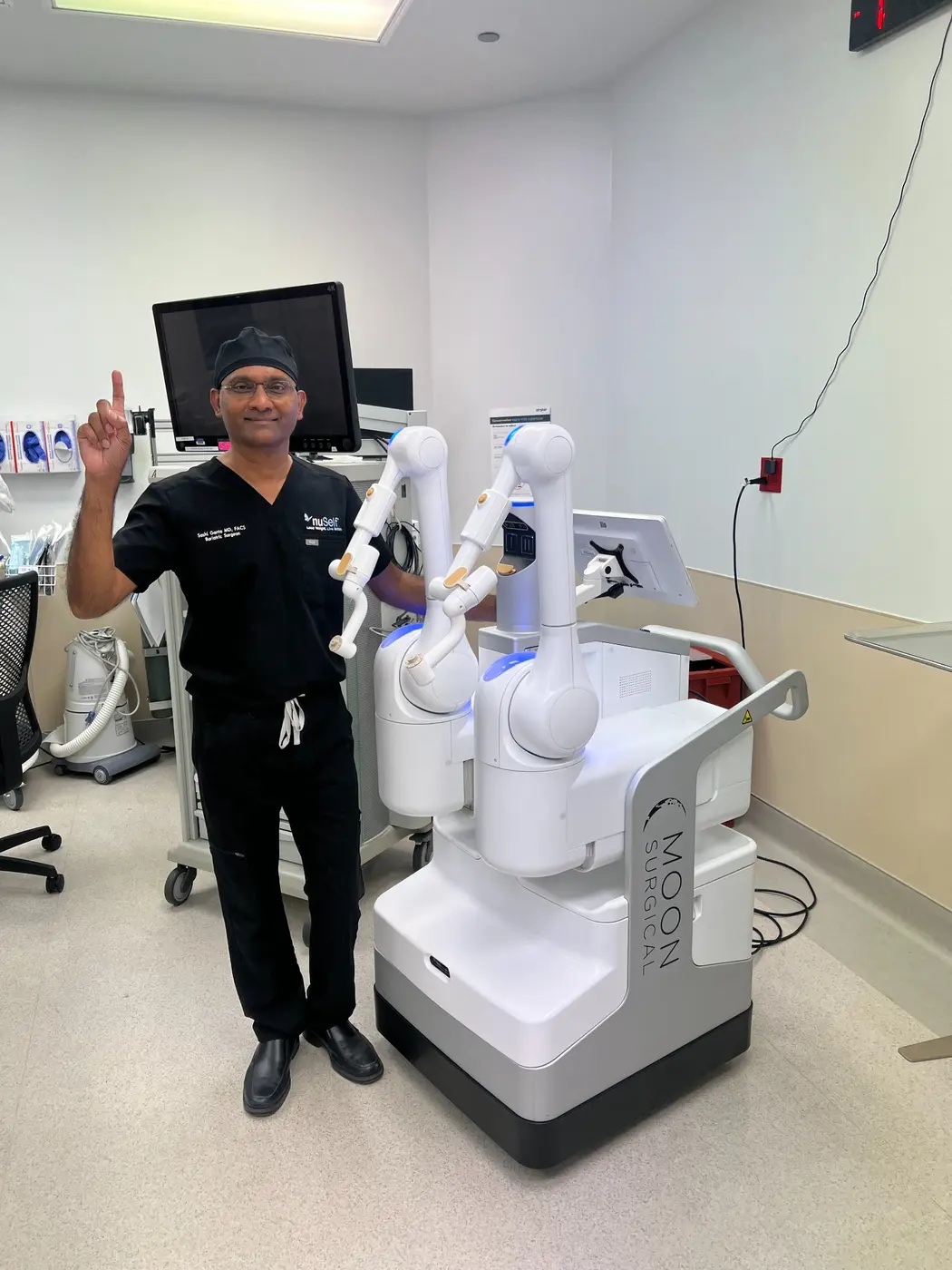
NuSelf surgeons select the operation, guide each instrument movement, interpret findings, and decide when another approach would be safer. The bedside team and anesthesia professionals remain essential throughout.
Meet the NuSelf physiciansHow quickly?
A robotic operation may be planned electively, but urgent symptoms are evaluated according to the underlying condition.
A stable condition with time to compare approaches, prepare health, and coordinate the appropriate facility.
Schedule a condition-specific surgical consultation.Increasing pain, reduced function, new obstruction symptoms, or another change related to the diagnosis.
Contact a clinician for timely evaluation.Severe pain, major bleeding, breathing difficulty, fainting, persistent vomiting, or acute illness.
Call 911 or go to the nearest emergency department.Who controls the system?
The surgeon, not the platform, chooses the procedure, performs the dissection and reconstruction, responds to findings, and remains accountable for the care plan.

Founder & Board-Certified Surgeon
Yale fellowship-trained surgeon with experience in advanced minimally invasive, robotic, complex general, bariatric, revisional, and second-opinion care.
View physician profile
Board-Certified, Fellowship-Trained Surgeon
Yale-affiliated chief residency and advanced fellowship training in minimally invasive, bariatric, robotic, and general surgery.
View physician profileWill recovery be easier?
Some patients experience less incision-related discomfort and earlier movement after minimally invasive surgery than after a comparable open operation. The condition, extent of dissection, complications, health, and pain plan can matter as much as access.
How long until I feel like myself?
A robotic gallbladder removal, hernia reconstruction, bowel resection, and bariatric procedure each have different healing requirements.
Approach is only one variable. Your written plan will be based on the actual operation, findings, facility course, and individual health, not on the robotic label alone.
Frequently asked questions
Short answers to the questions that often come next. Your examination, testing, and medical history determine what applies to you.
Explore patient resourcesNo. The surgeon controls the instruments and directs every step. Computer-assisted systems do not independently diagnose, decide, or operate.
No. Either may be appropriate depending on the procedure, anatomy, surgeon experience, and available facility. The relevant comparison is specific to your case.
Selected hernia, gallbladder, foregut, bowel, bariatric, and other abdominal procedures may be candidates. A consultation determines whether robotic access fits.
The da Vinci 5 is a computer-assisted surgical platform with a surgeon console, visualization system, and patient-side instruments controlled by the surgeon.
Yes. Bleeding, inflammation, scar tissue, anatomy, equipment issues, or another safety concern can require a laparoscopic or open change in approach.
No. Small incisions can reduce some access-related effects, but recovery depends heavily on the operation performed, patient health, findings, and complications.
Your next step
Tell us the condition or procedure you are considering and what you want to understand about access. Explore care options or schedule a condition-specific consultation.
This page provides general education and does not replace an examination, diagnosis, or individualized medical advice.