Planned small-incision care
The diagnosis, anatomy, previous surgery, health, and required procedure support laparoscopic, robotic, or endoscopic access.
Laparoscopic, robotic, and endoscopic care in Central Texas
Minimally invasive describes how the surgeon reaches the problem, not a single operation. NuSelf compares laparoscopic, robotic, endoscopic, and open approaches according to the diagnosis, anatomy, prior surgery, and work that must be accomplished safely.
What does it mean?
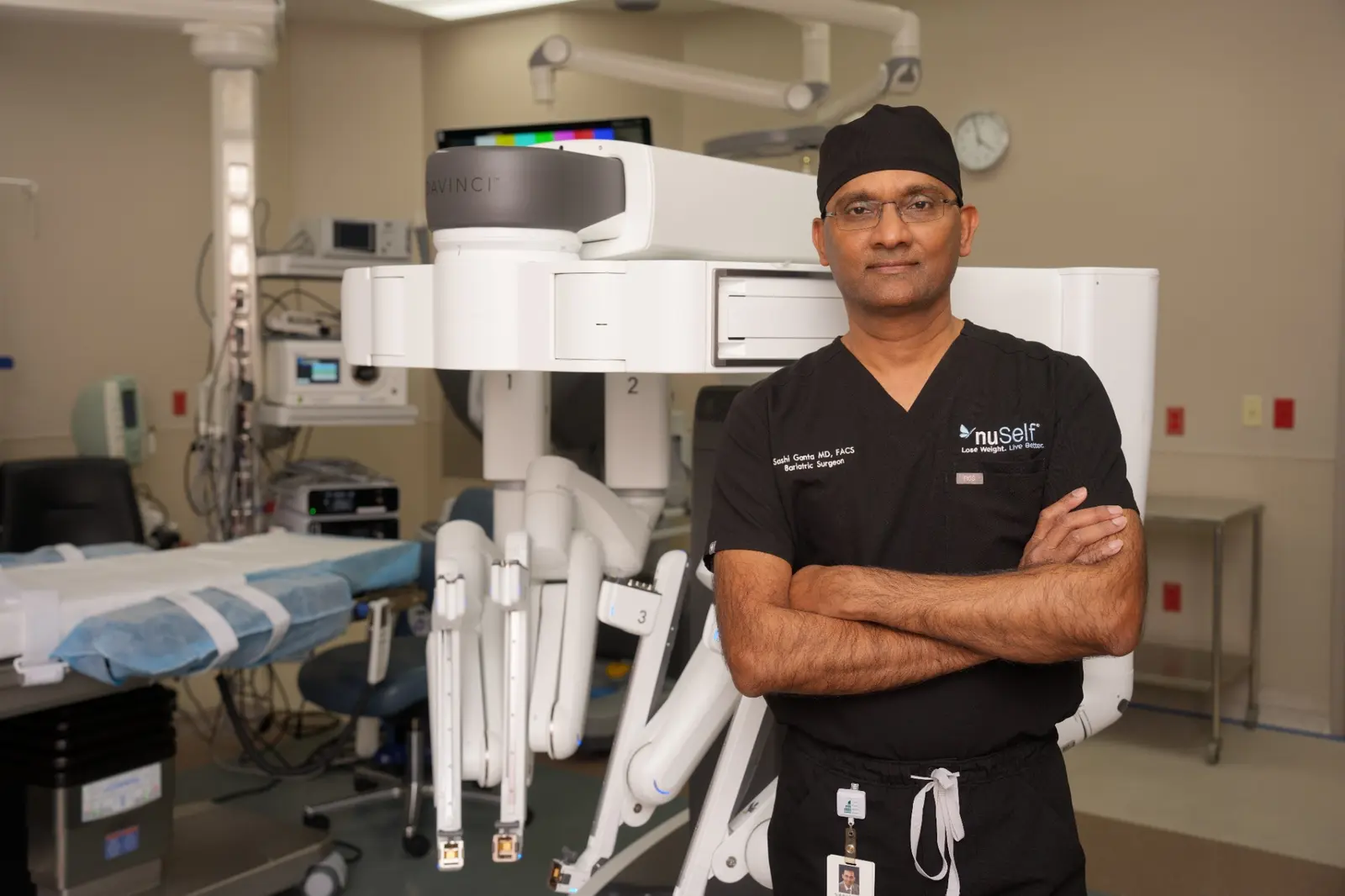
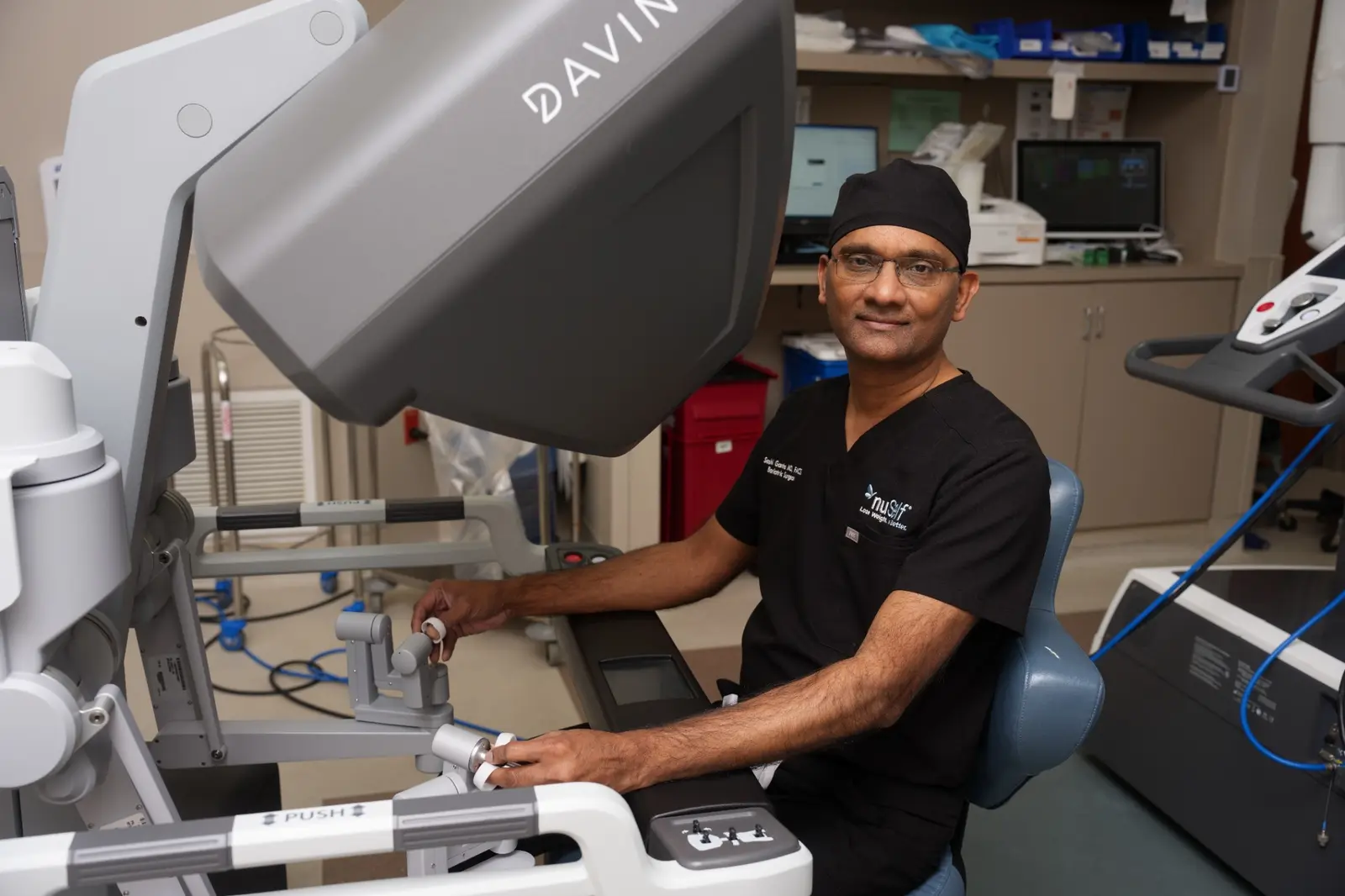
Laparoscopic surgery uses a camera and long instruments through small abdominal incisions. Robotic-assisted surgery uses a surgeon-controlled console and articulated instruments through similar access points. Endoscopy reaches parts of the digestive tract through natural openings and may diagnose or treat selected problems without an abdominal incision.
Open surgery uses a direct incision and remains appropriate when it provides safer exposure, better control, or the reconstruction the condition requires. A surgeon may recommend open access from the beginning or convert during a minimally invasive operation if findings make that safer.
The most important outcome is the right operation performed safely. Incision size is one part of that decision.
Am I a candidate?
Many patients can benefit from minimally invasive access. Severe inflammation, complex reconstruction, extensive scar tissue, instability, or another safety concern can change the recommendation.
The diagnosis, anatomy, previous surgery, health, and required procedure support laparoscopic, robotic, or endoscopic access.
Prior operations, large defects, inflammation, altered anatomy, or revision needs require individualized approach planning.
Acute illness or operative findings may require direct open access, emergency treatment, or a change from the initial plan.
How are approaches compared?
The surgeon considers what must be removed, repaired, reconstructed, sampled, or visualized. The comparison includes expected visualization, instrument movement, anesthesia, operative time, scar tissue, facility capabilities, cost, likelihood of conversion, and recovery.
Potential small-incision advantages can include less access-related pain, earlier movement, and smaller scars for selected operations. These benefits are not identical for every patient, and minimally invasive access does not eliminate bleeding, infection, leakage, recurrence, or other procedure-specific risks.
A well-established small-incision approach for many abdominal operations.
How does this compare with robotic and open access for my operation?
A surgeon-controlled platform supports three-dimensional visualization and selected complex movement.
Which part of my procedure benefits from the technology?
A larger incision can offer immediate access, tactile feedback, and broad reconstruction.
What anatomy or finding could make open access safer?
Technique follows judgment
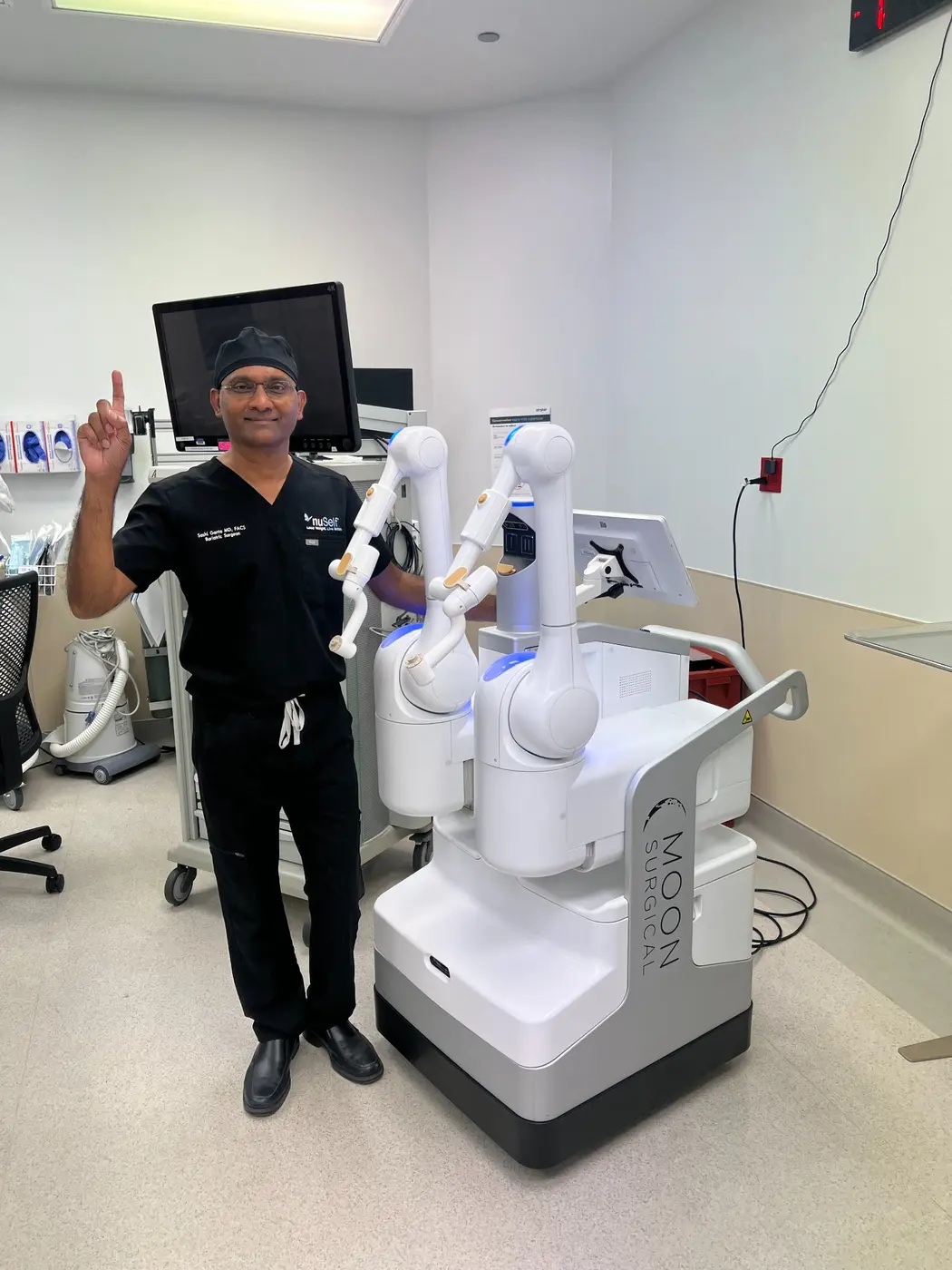
NuSelf surgeons can compare open, laparoscopic, robotic, and endoscopic options. The recommendation should explain what the approach contributes, what it cannot change, and how the team would respond to unexpected findings.
Explore robotic surgery at NuSelfHow quickly?
Approach planning belongs inside the diagnosis-specific consultation. Emergency warning signs should not wait for a preferred minimally invasive option.
A stable diagnosis with time to compare approaches, prepare health, and coordinate the appropriate facility.
Schedule a condition-specific consultation.Increasing pain, reduced function, new vomiting, bleeding, fever, or another meaningful change.
Contact a clinician for timely evaluation.Severe pain, major bleeding, breathing difficulty, fainting, persistent vomiting, obstruction signs, or acute illness.
Call 911 or go to the nearest emergency department.Who will perform the procedure?
Your surgeon should be able to explain why the proposed access serves the operation and when another technique would be safer or more effective.

Founder & Board-Certified Surgeon
Yale fellowship-trained surgeon with experience in advanced minimally invasive, robotic, complex general, bariatric, revisional, and second-opinion care.
View physician profile
Board-Certified, Fellowship-Trained Surgeon
Yale-affiliated chief residency and advanced fellowship training in minimally invasive, bariatric, robotic, and general surgery.
View physician profileWill it hurt less?
Pain and fatigue come from both the access points and the operation inside. A minor endoscopic procedure and a minimally invasive bowel resection do not share the same recovery. The anesthesia and medication plan is tailored to the exact procedure.
How long until I feel like myself?
Ask about driving, work, eating, lifting, exercise, and follow-up for the exact operation under consideration.
Small scars do not mean no restrictions. Internal sutures, bowel connections, hernia reinforcement, and other healing tissues may need protection even when the skin incisions are small.
Frequently asked questions
Short answers to the questions that often come next. Your examination, testing, and medical history determine what applies to you.
Explore patient resourcesYes. Robotic-assisted operations generally use small-incision access, with instruments controlled by the surgeon at a console.
Endoscopy uses a flexible camera through a natural opening and avoids an abdominal incision for selected diagnostic and therapeutic procedures.
No approach is always safer. The diagnosis, anatomy, surgeon experience, health, facility, and required operation determine the safest choice.
Yes. Bleeding, inflammation, scar tissue, anatomy, equipment concerns, or the need for broader reconstruction can require conversion.
Not necessarily. Internal healing and the operation performed determine lifting restrictions, even when the skin incisions are small.
Ask about training and experience with the specific operation, how each approach is selected, expected outcomes and recovery, and the plan if findings require a change.
Your next step
Tell us the diagnosis or operation you are considering and what matters in your recovery. Explore care options or schedule a condition-specific consultation.
This page provides general education and does not replace an examination, diagnosis, or individualized medical advice.